Friday, 23 January 2015

{Adaption A} 12: First Infographic Design Test (B&W)


The Fact: In their lifetime, the average person produces enough saliva to fill two swimming pools.

Version 3

Version 2

Version 1

New Influences

Wednesday, 21 January 2015

@Alan -- {Adaption A} 10: Infographic Soundtrack Research

@Alan Are any of these music examples along the right lines of what might suit my "Top 10 Facts about Weird Science" infographic? Embeds removed due to unfortunate auto-play feature.

Léon Theremin using his invention. [source]

Note: The well known sci-fi instrument used in most, if not all the audio clips below is called a Theremin [1] [2]


Carnival of the Dead (1 minute)


Creature Feature (1 min, 46 sec)


Podmen from Sector 7 (1 min, 49 sec)


Halloween X-Files Theme (2 min, 39 sec)


From Another World (2 min, 58 sec)


Mystery of Planet X (1 min, 21 sec)


Mystery of Planet X 3 (1 min, 21 sec)

Tuesday, 20 January 2015

{Adaption A} 09: The List; Re-Arranged - Least to Most Weird Science

[source]
Infographic: "The Top 10 Facts about Weird Science" Countdown

10. Scientists have created an Oxygen particle that allows a person to live without breathing.

9. One oxygen molecule can be breathed by hundreds of people and animals.

8. A headless chicken lived for 18 months.

7. A full head of human hair is strong enough to support the weight of two elephants.

6. More germs are transferred shaking hands than kissing.

5. Until the 1960s, injecting a species of frog with a woman’s urine was the only reliable pregnancy test.

4. In the 1930s, an American doctor tried to bring dead animals back to life by injecting them with chemicals and rocking them on a seesaw. He failed to replicate his relative success with dead humans.

3. Botox is the world’s most deadly toxin and is produced by a type of bacteria.

2. The average person produces enough saliva in their lifetime to fill two swimming pools.

1. There are more living organism on the skin of each human than there are humans on Earth.

{Adaption A} 08: Art Styles - Preferred Examples


{Adaption B} 06: Thoughts About & Rejection of Helium as a BB Housemate

[source]

Helium Properties
A noble gas.
Unreactive.
Colourless.
Odourless.
Available in pressurised tanks.
Used in balloons - connection to parties.
It is an inert gas, so it does not burn
It is also used in air balloons.
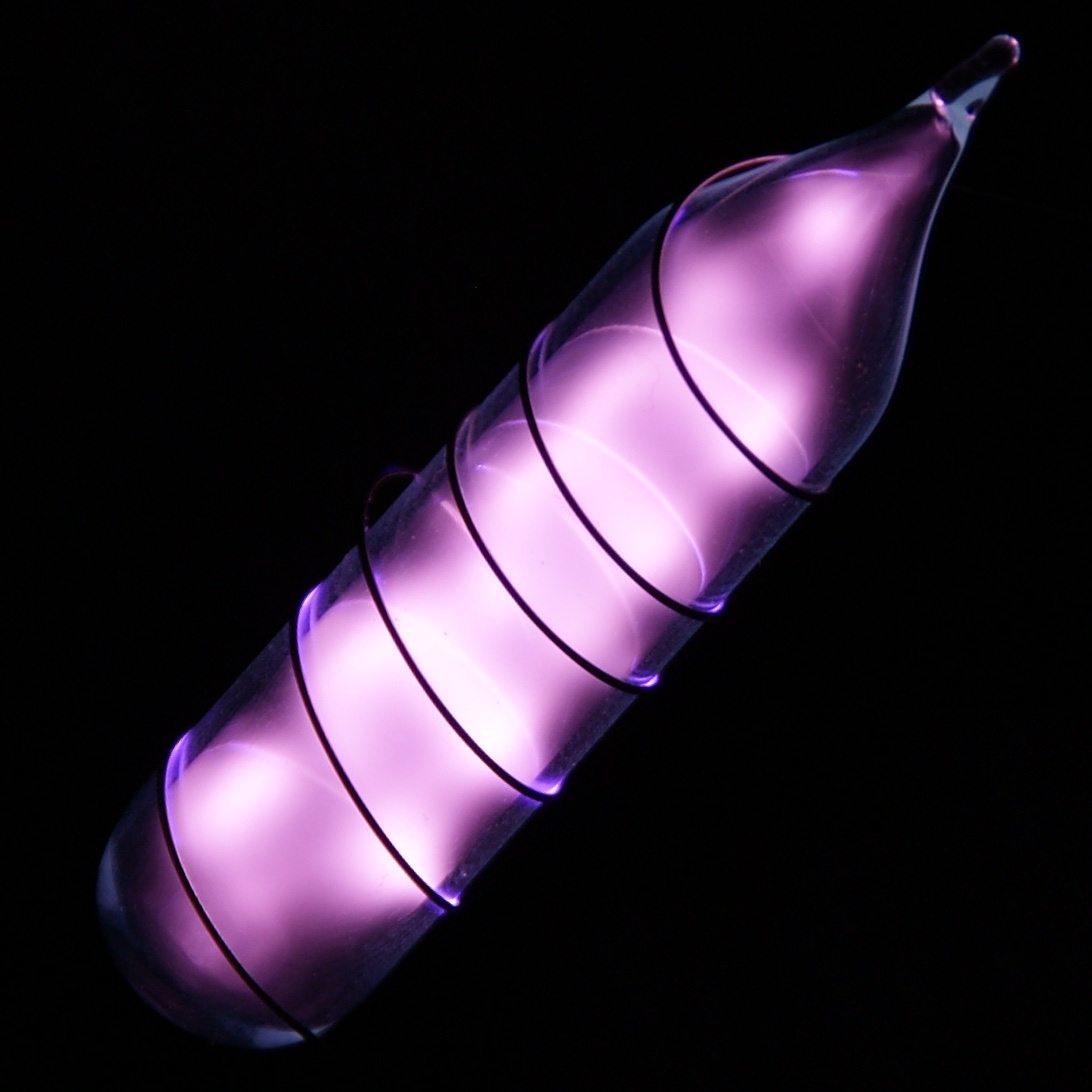
Helium glows a bright purple when electrically excited.
[source 01] [source 02] [source 03]


Helium as a Character: pre- Big Brother archetype connection
Light weight and bony with a dopey appearance and clothing indicating nobility, the clothing colours would pull from the glow colour if helium itself. Unfortunately this concept does not pay attention to the Big Brother archetypes connection, so can be considered unsuitable.
The characters may use exaggeration as part of their design, possibly of a caricature-esque appearance.


Helium with Big Brother archetype connection
As a Big Brother housemate Helium could be thought of as the lazy or quiet one due to its lack of reactivity. However the gas also relates to both air and party balloons, this opens up the opportunity of treating Helium as the house's typical "party animal"; this would directly go against the idea of helium being the quiet, lazy one. 


A possible overall character design aesthetic
The characters may use exaggeration as part of their design, possibly of a caricature-esque appearance.


Rejection
With all this in mind, since Helium is actually not that interesting as an element, it may not translate as an interesting character design.

Monday, 19 January 2015

{Adaption A} 07: Infographic - Ideas Development and Influence Maps

Previous post

Infographic: 'The Top 10 Facts about Weird Science'

After researching the uncanny and weird / creepy imagery, I have realized that focusing on making my graphic designs look this way is unnecessary because a surreal use of colour, such as via contrasting colours, would better achieve the 'weird-factor' without going too far. To focus too much on the uncanny is likely to be at the expense of the more important science / 1950s B-movie aesthetic. 

A preferred basis would be for any graphic designs to keep a cardboard cut-out aesthetic, but be simple in design. 

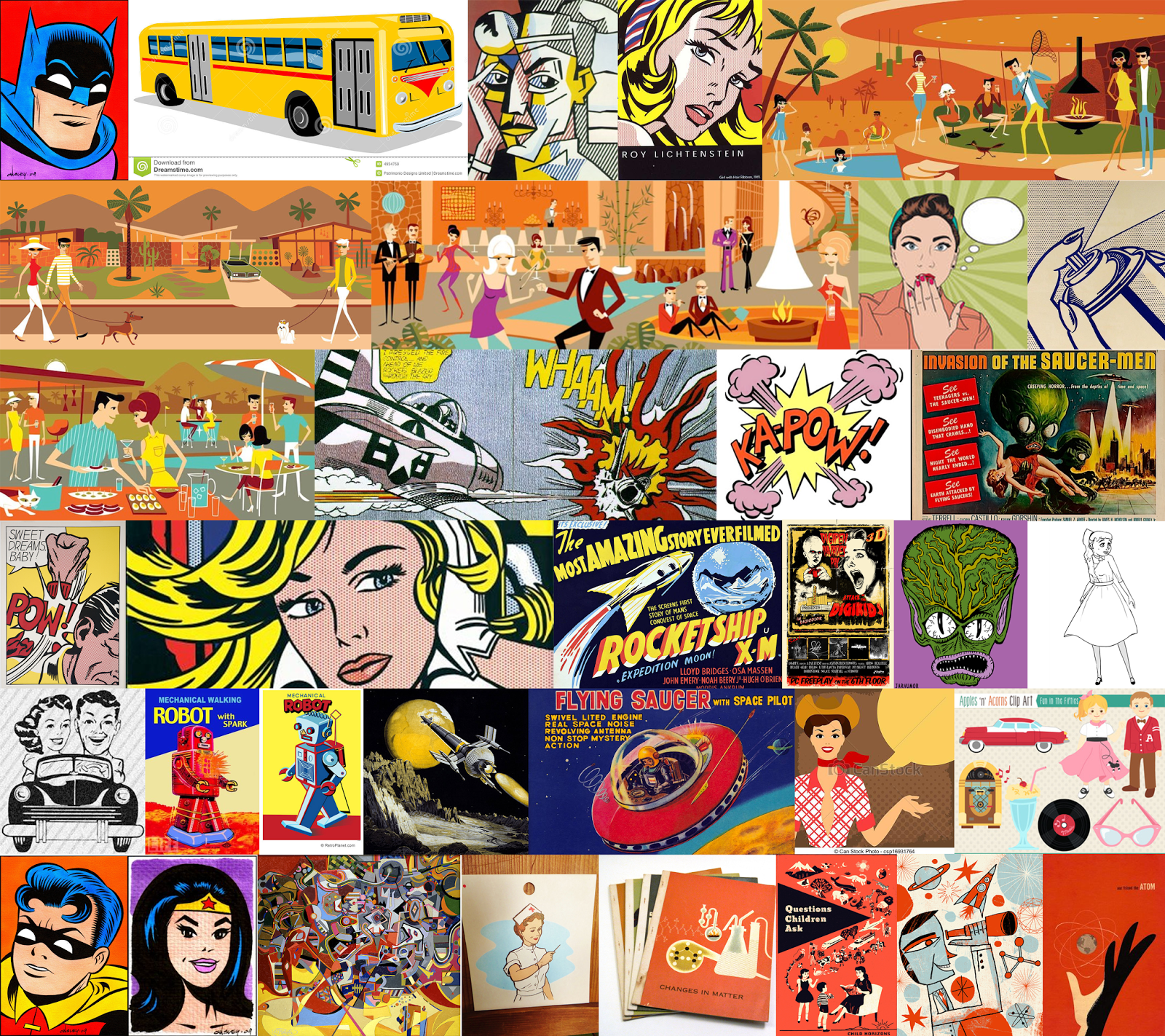
I have since moved on to primarily researching art of the 1950s to help guide my graphic design aesthetic, as illustrated by the Influence Map below...


1950s Art - Influence Map 


Weird / Creepy - Influence Map